
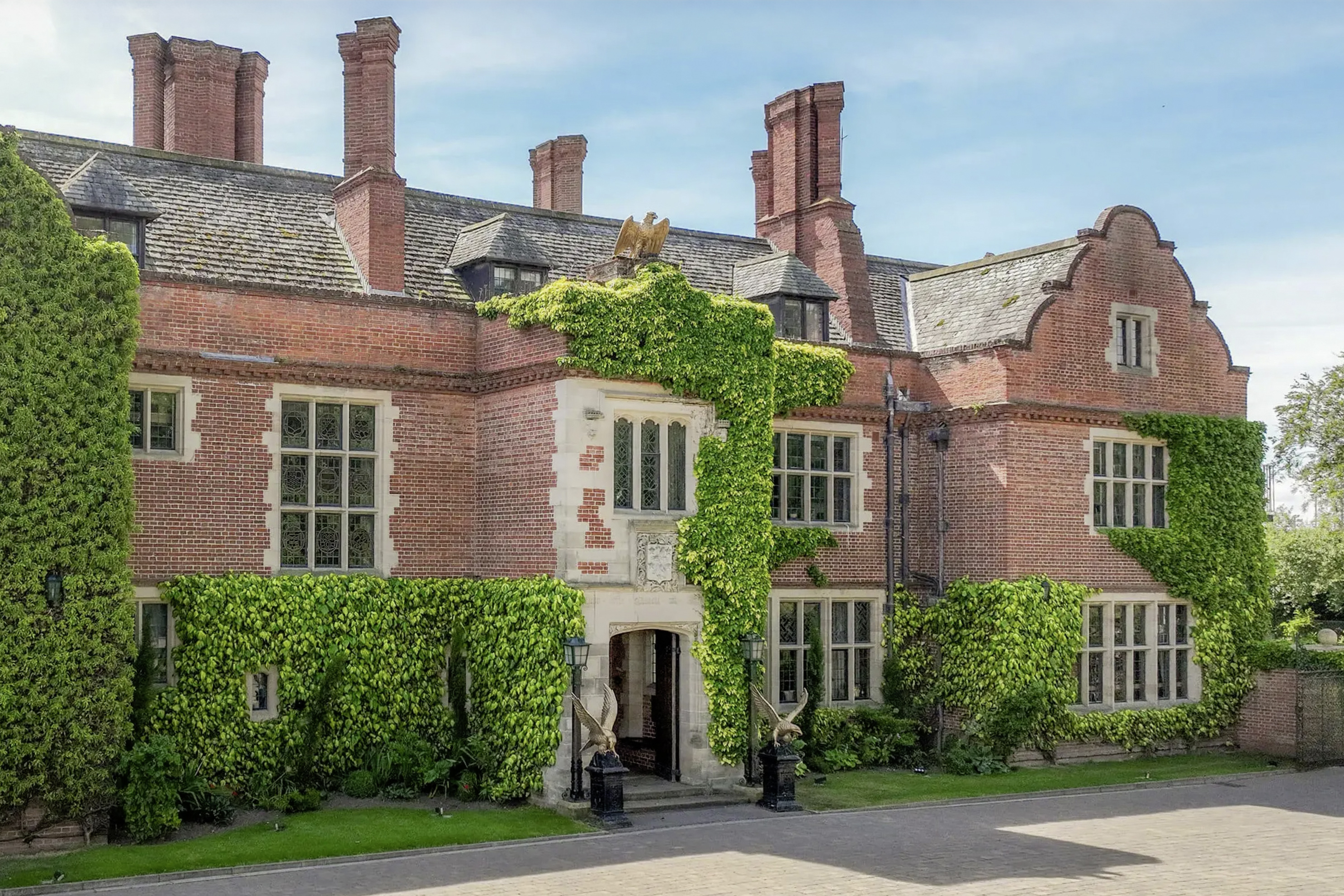

Queen Ethelburga’s Collegiate: new dual-fuel burners for an existing heating network
Queen Ethelburga’s Collegiate comprises four boarding and day schools for girls and boys and is located in Thorpe Underwood, between York and Harrogate. The collegiate operates an extensive heating infrastructure to supply its facilities across the large campus. Three boilers, each rated at 1.5 MW, form a small-scale district heating network serving several buildings, including accommodation blocks, a laundry, the aquatic centre, and an insurance company with offices on site. However, the burners originally installed on the boilers were becoming increasingly problematic. “They were constantly locking out, and parts were becoming difficult to source,” explained Andrew Lamb, who is responsible for the collegiate’s heating system. Faced with these issues, it was clear that am upgrade was necessary.
The decision to transition to Weishaupt burners was influenced by a previous successful trial where Queen Ethelburga's had installed a Weishaupt burner on a back-up boiler situated in their satellite plant room, which serves as a contingency for the aquatic centre. “The trial burner worked really well,” said Andrew Lamb. “The experience convinced us to proceed with the replacement of all three burners.”
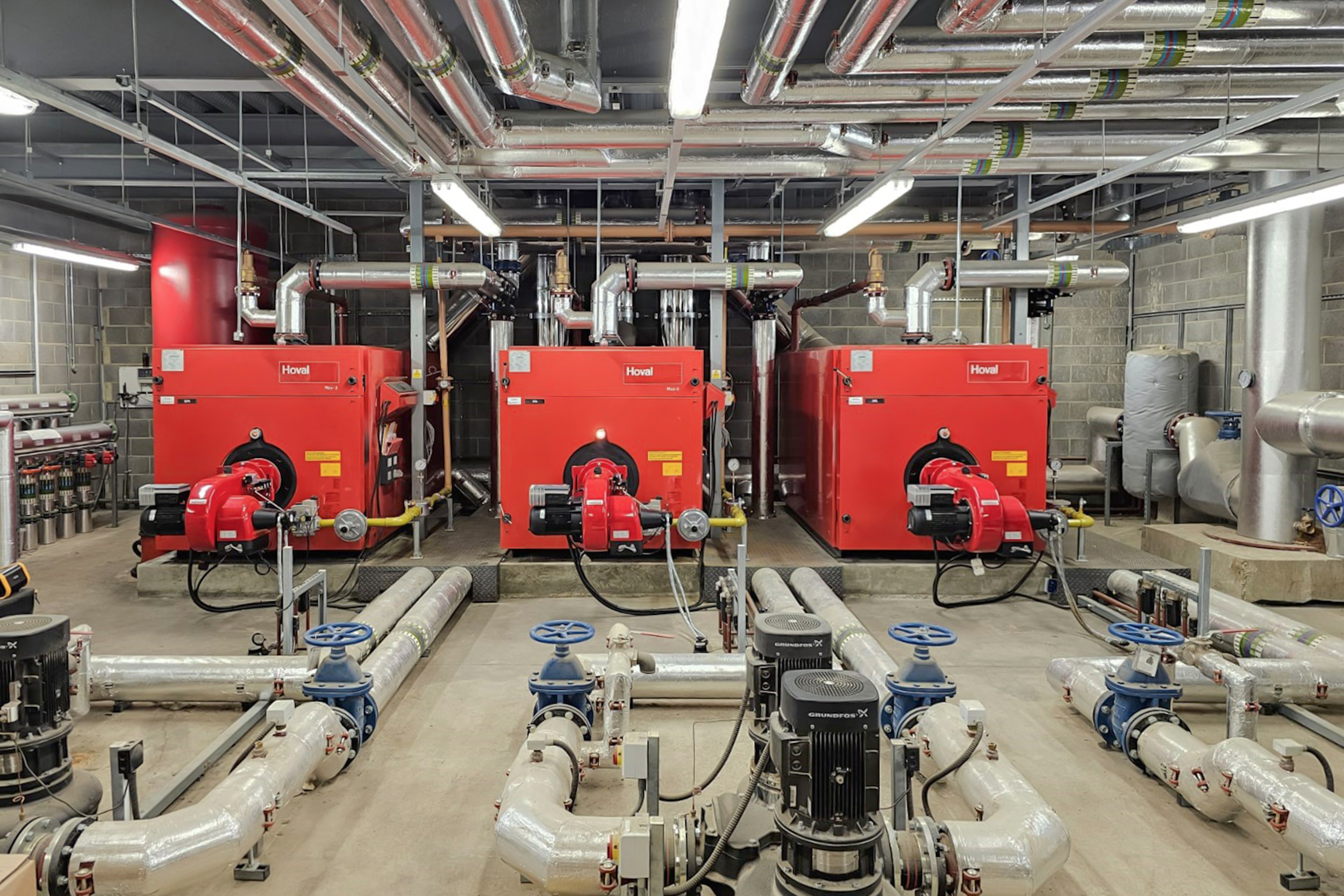
The new Weishaupt monarch® burners have maximised both reliability and efficiency. The burners are equipped with variable speed drive (VSD). A frequency converter mounted on each burner's motor optimises energy consumption by adjusting the motor speed according to heat demand. Once the system reaches temperature, the burner turns down, reducing both and electricity consumption. The W-FM54 digital combustion management system ensures precise control. Initial calculations showed a payback time of five years for the investment, underlining the long-term financial benefits of the investment.
The new WM-GL20 dual-fuel Weishaupt monarch® burners operate on LPG in fully modulating mode or on hydrogenated vegetable oil (HVO) in three-stage mode. This enables the collegiate to optimise its fuel choice according to cost and availability, all while maintaining efficient combustion. Furthermore, the reduced emissions are in line with the collegiate’s strong commitment to sustainability.
Facts
Project
Queen Ethelburga’s Collegiate, Thorpe Underwood
Product
3 dual-fuel burners
Model
WM-GL20
Rating
4 500 kW
Application
Heating, LTHW
Other reference sites of this type:
Singleton Hospital in Swansea modernises with Weishaupt multiflam® burners
The burners on the steam boilers installed at Singleton Hospital in Swansea in the 1980s and 1990s needed upgrading to avoid persistent, lengthy, and costly downtime.
Precision heat control at Pendle Witch Distillery
Clitheroe-based Pendle Witch Distillery is a family-run artisan distillery producing small-batch single-malt whisky, bourbon, and gin..